

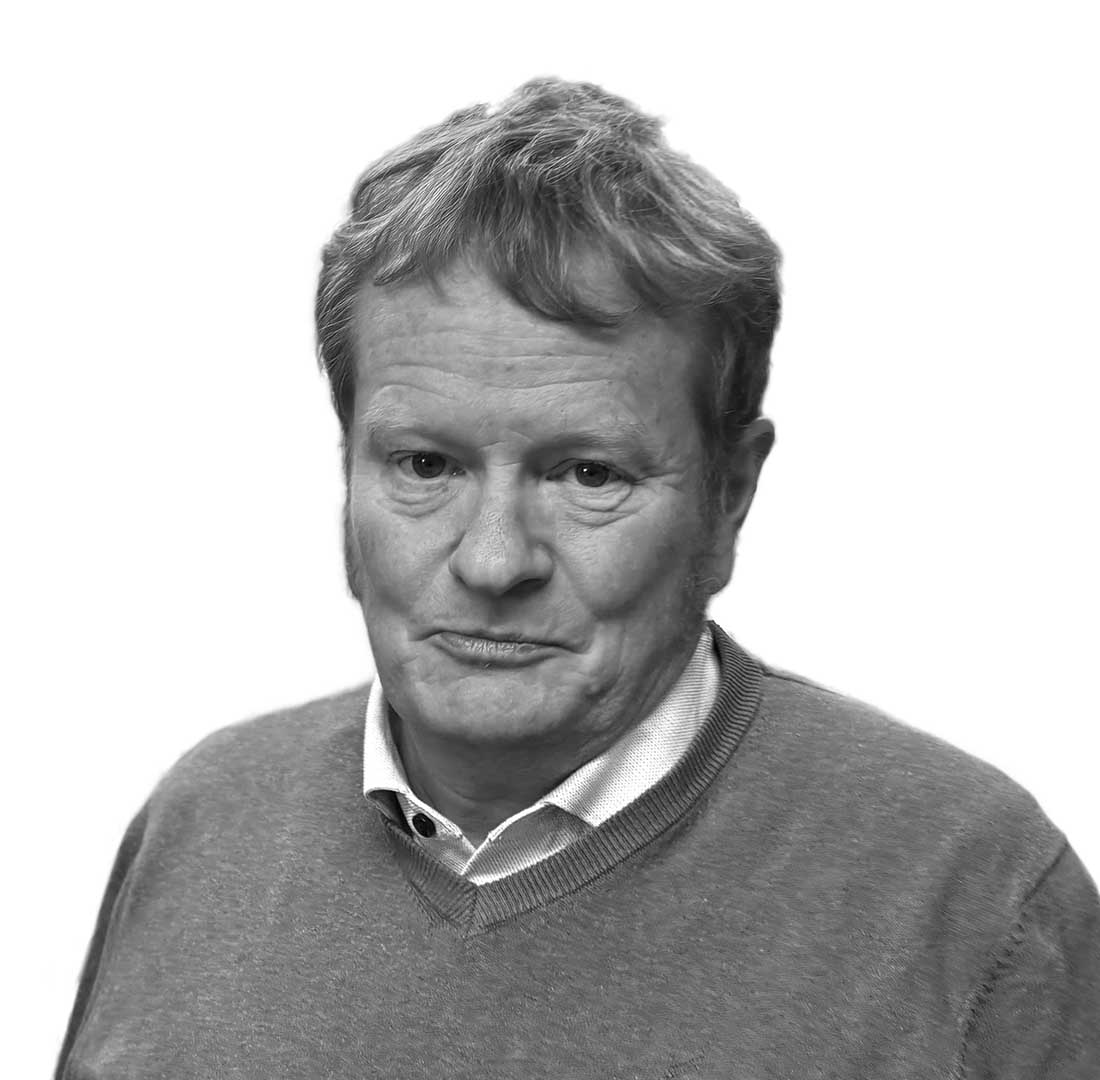
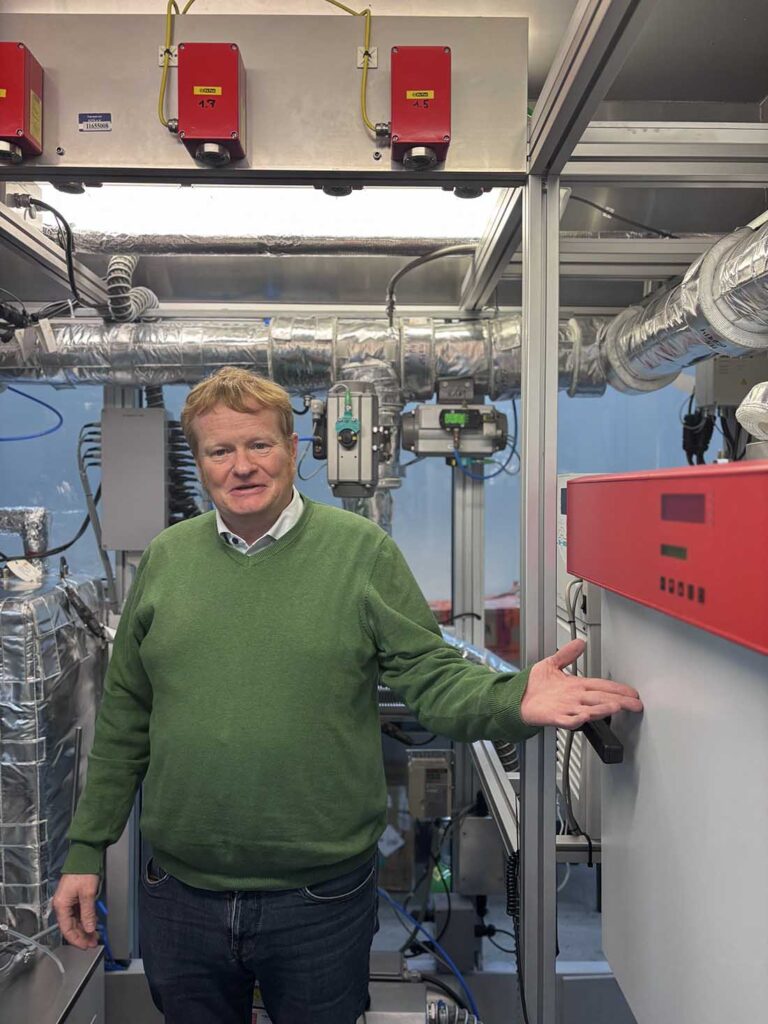
Professor Christof Asbach stands at the forefront of one of the most critical, yet invisible, frontiers of the 21st century — the air we breathe. As the head of the Department for Filtration and Aerosol Research at the Institute of Environment & Energy, Technology & Analytics (IUTA) in Duisburg, Germany, he has dedicated his career to decoding the behavior of particles that define health, industry and global prosperity.
His journey into the microscopic world was born of serendipity. Originally an electrical engineering student in the late 1990s, a chance encounter with a blackboard announcement regarding atmospheric particle measurement diverted his path from traditional engineering to the dynamic field of aerosol science. That pivotal moment launched a decades-spanning career that has included time at the University of Duisburg-Essen, where he holds an honorary professorship today, to the University of Minnesota, where he helped pioneer contamination control for Extreme Ultraviolet (EUV) Lithography — a technology powering advanced microchips.
Since joining IUTA in 2006, Professor Asbach has become a central figure in the global filtration community. Whether investigating occupational exposure to nanoparticles or leading the charge on national and international standardization committees, his work bridges the often-wide gap between academic rigor and real-world application. He has served as president of the Association for Aerosol Research (GAeF), is editor of the scientific journals Aerosol Research and Aerosol and Air Quality Research and sits on the Scientific Advisory Board for the Centre for Doctoral Training in Aerosol Science in the United Kingdom, actively shaping the next generation of scientists.
Beyond the lab, Professor Asbach embodies the principles he researches. A staunch advocate for the “air as food” philosophy, he challenges us to view clean air not as a luxury, but as a fundamental nutrient essential for human vitality. Whether arriving at the institute on his bicycle or cutting through the noise of modern media to deliver scientific truth, he remains a steadfast guardian of the atmosphere — proving that the smallest particles often hold the biggest impact on our future.
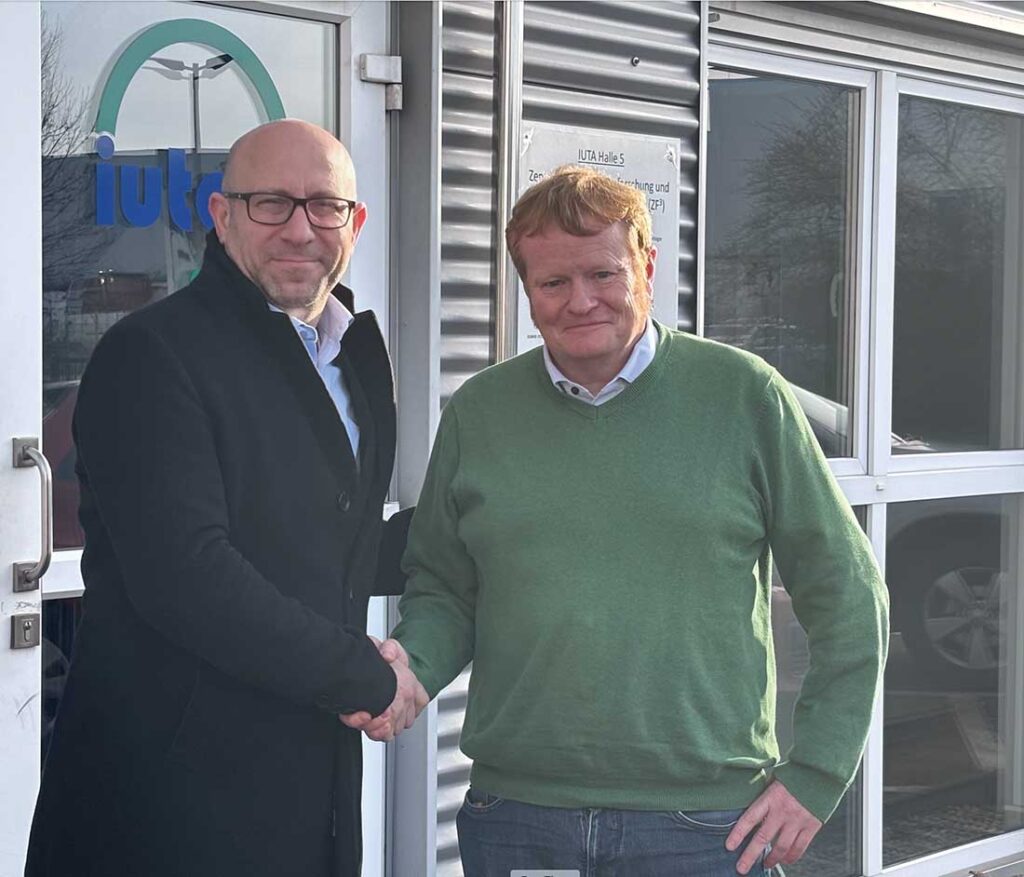
IFN’s Global Correspondent Dr. Iyad Al-Attar recently had the opportunity to interview Professor Asbach. The objective was to unpack the critical, often invisible role of filtration in safeguarding humanity, optimizing industrial processes, and driving global prosperity and public health.
Dr. Iyad Al-Attar: From a scientific and research perspective, what breakthroughs are needed to propel filtration to the forefront of air quality solutions?
Professor Christof Asbach: There are three parts to this question. Part one is the ubiquity of filtration and air as food. The role of filtration is frequently underestimated, largely because filters are ubiquitous yet often go unnoticed. Whether in a car or a vacuum cleaner, they are an integral part of daily life, yet the average consumer rarely thinks about them. However, when we describe the importance of filtration, we must also address the importance of air quality, which is frequently misunderstood or underappreciated.
I advocate for the concept of air as food. Consider our daily consumption: an adult inhales approximately 12 kilograms (kg) of air every day, compared to just 3 kg of liquid and roughly 1.5 to 2 kg of solid food. While the quality of our water and food is considered a priority worldwide, air quality is far less appreciated.
Studies clearly demonstrate that poor air quality has impacts beyond physical health issues such as lung and cardiovascular issues. There are significant economic implications as well. We know that cognitive function and productivity are heavily dependent on air quality. A 2019 study in the Proceedings of the National Academy of Sciences indicated that the economic negative impact of poor air quality in the United States amounts to several hundred billion dollars annually.
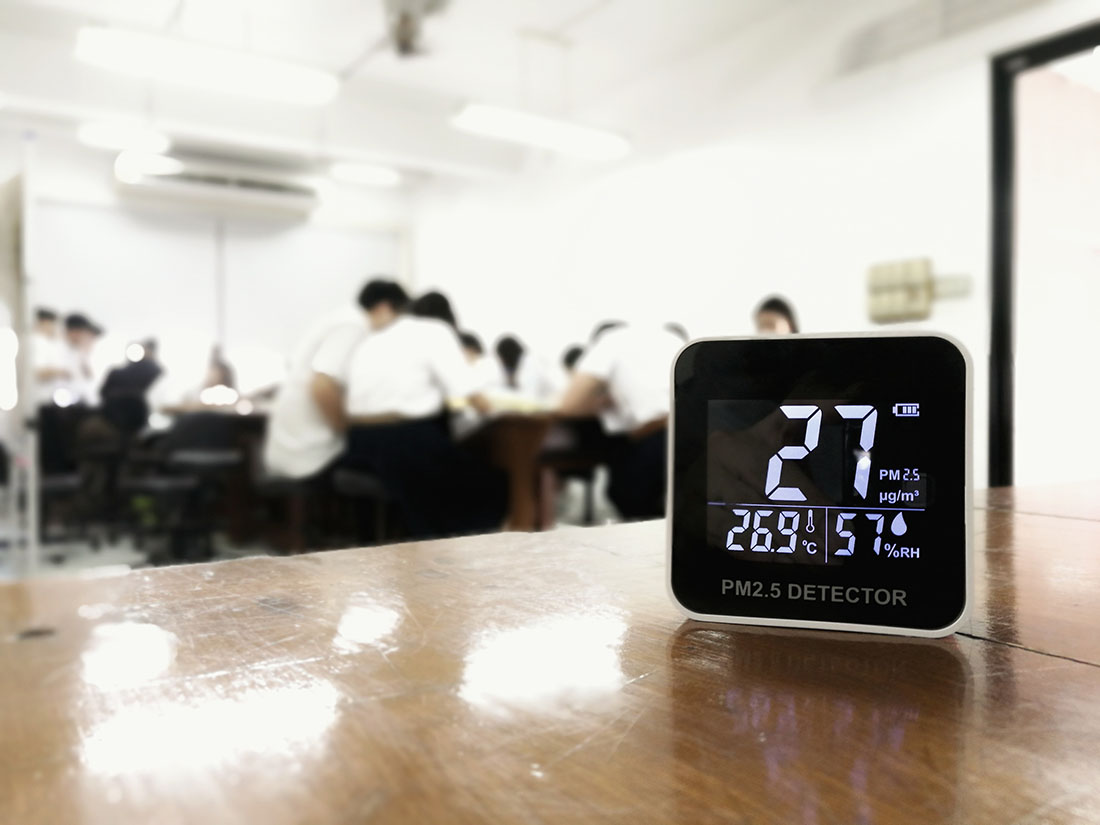
Given that we spend 90 percent of our lives indoors, this is where filtration becomes critical. While we can attempt to control indoor emission sources, improving air quality through filtration is often more feasible. Although there is an upfront cost for filtration devices, the return on investment regarding health and productivity is substantial, creating a significant positive societal impact.
Part two is the question of innovation and testing. There are individual standards for almost any kind of filter, which is good, because of very different fields of application. This requires the filters to be tested at different settings, including flow rate as well as particle and aerosol properties. While these tests usually reflect the performance of new filters very well, representative filter ageing and determination of the corresponding change in performance in terms of filtration efficiency is much less understood and consequently not well represented in standard testing. However, the lifetime of a filter is an essential factor in assessing its sustainability.
Part three is the necessity for independent validation. I believe it is undeniable that they must be tested before utilization. When we look at novelty, most past developments focused on increasing filtration efficiency or maintaining efficiency while lowering pressure drop. However, other aspects — such as the durability of materials — must be verified before they are sold on the market.
Furthermore, specific applications involve unique environmental conditions, such as high humidity, high temperature, or — as we see in compressed air filtration — high pressure. This is where standard manufacturer testing often falls short, and where research becomes interesting. When requirements go beyond the standards, companies should turn to capable institutions for independent evaluation and validation of their new media.
Dr. Al-Attar: Do you foresee equipment, such as air handling units or HVAC systems, being equipped with analytical tools relevant to filtration?
Professor Asbach: Yes, specifically regarding low-cost sensors for particles and gases. I think these can definitely be used to control and monitor filter performance during application.
We must distinguish between different types of filters. For mechanical filters, performance control is already being done using pressure sensors to monitor the differential pressure across the filter. If the pressure drop exceeds a certain value, that is the criterion for changing a classical, purely mechanical filter.
However, if we have an electret filter or charged media, the charge of the filter decays over time. This means the filtration efficiency decreases, yet the pressure drop is not a sufficient criterion for exchange because it doesn’t change significantly. In this case, the filtration efficiency must be monitored. This could be done using simple particle sensors upstream and downstream of the filter; by calculating the ratio, you know the efficiency. If it falls below a certain threshold, that is the sign that the filter needs to be changed.
The behavior is very different when we talk about adsorption filters or molecular filters. These initially have high efficiency, but over time, the “breakthrough” increases, meaning the downstream concentration of specific gases rises. This is something that could be monitored with low-cost gas sensors to predict the end of the life cycle.
Quite some time ago, we had a project together with the Heinrich Heine University in Düsseldorf where we looked at packed beds of activated carbon. As the activated carbon gets loaded, larger parts of the bed — from the upstream to the downstream side — become saturated with gas. The University in Düsseldorf had developed a small sensor that was installed inside the packed bed. Whenever the sensor — positioned towards the downstream side —started to detect the specific gas that was supposed to be adsorbed, we knew we were approaching the end of the bed’s life and it needed to be changed quickly.
I see many new opportunities arising from the miniaturization of sensor techniques and the drastic decrease in their cost.
Dr. Al-Attar: If a young person today wanted to embark on a career in air quality or aerosol science, they would likely encounter a very noisy landscape. There are so many standards, initiatives, and conflicting voices — especially in the wake of the pandemic. What advice would you give to the next generation of researchers trying to cut through this noise and find the right scientific coordinates?
Professor Asbach: That is a good and tough question. First of all — and this applies not just to aerosol research but to life in general — do not trust the loudest voices on social media. You must seek out the real experts to find the truth. Science is always about the truth, not about opinions, no matter how loudly they are expressed.
As researchers, when we try to convey our results to the general public, it is crucial to boil them down to the key findings. We measure many different concentrations and pollutants, but expecting the average citizen to understand all those details is impossible. This is why I believe it is vital to develop air quality indices. These try to weigh the different pollutant concentrations based on their effects and combine them into a single number: if it’s high, air quality is poor; if it’s low, it’s good.
However, it is equally important to standardize these indices. It is counterproductive to have five different indices where each means something different; people will just get lost. We need harmonized standards not only for the outdoors but also for indoor environments. And we must ensure that the background of each index — for example, how it is composed and how individual pollutants are assessed — is transparent. This clarity is what will help a young person get interested in the field — when the science is well-described and harmonized.
This leads to the role of standardization committees. The main requirement for developing good standards is a good committee. I am a member of several committees, and I can clearly see that the quality of the published standard correlates with the quality of the members. I recommend every expert to participate. It is a reciprocal process: the standard is improved by your expertise, but you also learn a lot from the other complementary experts in the room.
Dr. Al-Attar: How important is it to test filtration performance against real-world pollutants such as wildfire smoke and VOCs, compared to standard lab aerosols? We often assume that a filters tested in the lab will perform identically when installed in gas turbines or HVAC systems, but performance tends to deviate from the balance of the lab settings.
Professor Asbach: The filter test standards use standardized test aerosols, which are lab-generated. These may not reflect what is really in the air being filtered in the actual application.
That is always the big compromise you have to make when you develop a standard. You have to do something that, on the one hand, is doable and reproducible. It must deliver the same results if the same filter is tested by different laboratories. This is a crucial aspect of standardization: the result must not depend on the laboratory where it is tested. Therefore, we must use aerosols that can be produced in a very reproducible way.
Typically, these are salt particles — sodium chloride or potassium chloride — or di-ethyl-hexyl-sebacat (DEHS) droplets. However, these are rarely encountered in the real atmosphere, where you have, among others, soot particles, organic particles or mineral dust.
The shape of these real-world particles can be very different, which affects not only the deposition efficiency — via the interception mechanism — but also the long-term performance regarding the buildup of the filter cake.
There is a standardized way to test filter loading using standardized test dust, but depending on where you apply the filter, the actual aerosol may look completely different. This means the filter cake structure — and therefore the long-term performance — can be completely different from the lab prediction.
It is a constant trade-off between repeatability in the lab and representativeness of the real field. This is why it is so important to have complementary expertise in the standardization committees. We need to ensure we are not just relying on what has been done for decades, but are also bringing in new scientific findings — for example regarding these loading effects — to bridge that gap.
Dr. Al-Attar: This brings us to the topic of standards. Is there a need for universal standards to unify our efforts for a better understanding, implementation and optimal air quality outcomes?
Professor Asbach: There are a few aspects to this. First, regarding filtration standards for specific applications: if new applications arise, new standards will always be necessary.
However, the question I always ask myself is: do we really need so many national standards? Wouldn’t it be better to join forces internationally, take the best elements from the national standards, and develop international standards that can be applied worldwide?
For example, this is currently being done with air cleaner standards. Previously, there were various national standards, but they are now being developed by my colleague Dr. Stefan Schumacher and the committee members into an international IEC standard. This harmonization would make life a lot easier for companies; they would no longer need to certify the exact same filter according to multiple different standards just to sell it in different regional markets.
The third aspect is what is missing in the standards generally: are we using the right metrics?
We see new scientific developments, and I guess this will always affect standardization because committees must account for new evidence. In the field of air quality, we are seeing a shift of focus from larger particles towards smaller particles — specifically ultrafine particles (UFPs). The new European Air Quality Directive, published in late 2024, requires all EU member states to determine their concentrations in the atmosphere because there is evidence that they may cause stronger health effects than large particles.
Currently, this is not reflected in most filtration standards. Therefore, I expect that the size range for which filters — such as HVAC filters — are tested will eventually be extended toward smaller particles, specifically into the nanoparticle range.
Dr. Al-Attar: What are the biggest technical challenges that still need to be overcome in air filtration technologies?
Professor Asbach: One of the perpetual challenges we are always discussing in the field of filtration is achieving very high efficiency and low pressure drop simultaneously. However, that only considers the filter itself.
I think more focus should be placed on the operation of the filtration system. Very often, we see systems running at a constant flow rate, which does not necessarily meet the actual requirements. If there are few people inside the building, or if the pollutant concentration is low, we can operate with lower flow rates. In other scenarios, you may need to increase the rate.
Controlling ventilation and filtration systems “on demand” can result in much lower energy consumption. We usually focus on lowering pressure drop to save energy, which is valuable, but considering that climate change is one of the biggest challenges humanity faces, we need to maximize energy efficiency in other ways. Implementing demand control using new sensor technologies — not just for the carbon dioxide concentration in the room, which is already done — but also for particles and other gases, can significantly improve system operation. We have investigated these opportunities in the project 6Demo, funded by the German Federal Ministry for Economic Affairs and Climate Action. The focus here is on ventilation systems in production facilities and the results are very promising.
To go a step further, we must consider not just indoor pollutant sources but also outdoor concentrations. If we have a fresh air supply system, we should measure both indoors and outdoors.
Consider this scenario: When people arrive at an office in the morning, indoor carbon dioxide levels rise, which typically triggers an increase in the ventilation flow rate to pump in fresh air. However, if this coincides with the morning rush hour, the outdoor air may have high concentrations of nitrogen oxides and particles, for example. By pumping in that “fresh” air, you are introducing new pollutants.
Therefore, based on a combination of indoor and outdoor measurements, we can better control the ventilation system — optimizing the ratio of fresh air supply versus recirculation based on intelligent data.
Dr. Al-Attar: What changes or advancements would you like to see in the air filtration field?
Professor Asbach: There is no need to pull out my entire wish list, but having spent most of my life in aerosol characterization and measurement techniques, I can point to a few specific desires.
The persistent difficulty is that measuring a wide range of particle sizes requires using different instruments based on different measurement principles. This results in different equivalent particle diameters, making it always difficult to merge the results from these different instruments into a single coherent dataset.
Something that has always been on my wish list — though I don’t really have an idea on how to appropriately achieve it — is a single measurement device that gives you the size distribution from the very small nanometer range up to the large micrometer range. This would cover the full spectrum of particle sizes relevant for filtration. Currently, that is missing, at least with sufficient size resolution.
The second item is the combination of physical and chemical analysis. For general air quality measurements and filtration testing, it is crucial to know both the size and the chemical composition of particles. Devices for this exist, like Aerosol Mass Spectrometers, but they are incredibly complex, and the data evaluation is equally difficult. It would be nice to have something much simpler, and perhaps artificial intelligence can help here in the future, especially with the evaluation.
Finally, I would love to see a broader understanding by the public that besides the health effects, there is a massive economic impact of poor air quality. The costs of filtration are very likely to be overcompensated by the economic benefits. I hope this becomes better understood: by improving air quality, we not only improve our health but also the productivity of companies and society.
Final Thoughts
Dr. Al-Attar: Given your experience and our discussion today, do you have any final thoughts? Where would you like to see air quality and aerosol research go in the coming years?
Professor Asbach: That opens up another big wish list! I think we have come a long way in terms of improving outdoor air quality. However, I would love to see indoor air quality (IAQ) come more into focus, because that is where we spend most of our time. Consequently, this is where poor air quality most often makes us sick or unproductive, simply because it represents the bulk of what we inhale.
As I mentioned at the very beginning, viewing air as food would really help bring people’s attention to its importance.
I want to see more research done not just on improving IAQ, but on deeply understanding it — understanding the health effects and the technical possibilities for remediation. This naturally directs us toward better filtration and the use of effective devices. I believe this shift will have a massive impact on society, improving not only general public health but also the global economy.
A Concluding Reflection: The Architects Of Our Atmosphere
The time spent with Professor Asbach did far more than clarify the technicalities of aerosol science. It is clear that the responsibility toward the air we breathe is twofold: We are both the generators of the burden and the architects of the cure. Professor Asbach underscored a vital idea of air as food, and noted that progress depends on reducing the noise and tackling dynamic problems with more than static solutions. Our mandate is clear: to elevate filtration from a background utility to the forefront of human consciousness, ensuring that the air of tomorrow is cleaner, safer, and more nourishing than the air of today.