

India-based WMW Industries Pvt. Ltd. — a BVK Group company — manufactures woven filtration fabric, woven meshes and filters that are used in a variety of applications and across global markets. Recent investments have expanded the company’s capacity for specialty filter elements used in fuel and polymer applications.
Arun Rao, IFN’s international correspondent in India, recently had the pleasure of speaking with WMW Industries’ Director Harsh Khaitan to learn about the company and its capabilities.

IFN: Kindly provide a brief history of your company.
Harsh Khaitan: Our journey is rooted within the BVK Group, which has been active in the technical woven filtration fabric and mesh space since 1963. The group entered the sector at a time when woven metallic mesh was primarily used by the pulp and paper industry. With more than six decades of experience in manufacturing metal and synthetic woven filtration mesh, the group’s evolution has been driven by a focus on precision weaving, process discipline, and serving highly demanding industrial applications.
A major milestone was achieved in 2011 with the formation of GKD India Ltd., a joint venture between WMW Metal Fabrics and GKD Gebr. Kufferath AG, Germany, bringing together global weaving expertise with a robust local manufacturing and sales network. In 2024, the joint venture was fully acquired by WMW Metal Fabrics Ltd. and consolidated under the WMW brand.
Today, WMW Industries serves a wide range of sectors including paper and pulp, distillation, pharmaceuticals, defence and space, automotive, hydraulics, energy, and general filtration, while also supplying specialized meshes for architectural applications. WMW Industries holds several industry firsts, including being the first wire mesh manufacturer globally to publish an Environmental, Social, and Governance (ESG) report, the first to operate a LEED Platinum-certified facility, and the first in India to offer an integrated, end-to-end weaving-to-finishing capability.
IFN: Please share details about BVK’s manufacturing infrastructure and capacity.
Khaitan: We operate two manufacturing facilities spread across a total area of 32,000 square meters. Our infrastructure includes state-of-the-art German-made weaving machines, along with comprehensive in-house processing facilities where we treat, form, slit, clean and coat the filter media. We operate a fully equipped quality assurance laboratory and a government-recognized R&D department, with a strong focus on continual improvement.
Our annual production capacity is approximately 2 million square meters of woven filtration fabrics, covering metal, hybrid and synthetic variants. Additionally, we manufacture many filters, primarily in stainless steel, with elements of aluminium, bronze and copper. Our expertise lies in post-weaving processes that enhance filtration performance. We also offer knitted mesh filtration media for specialized applications and are among the few manufacturers with in-house heat treatment and flattening capabilities. Recent investments have further expanded our capacity for specialty filter elements used in fuel and polymer applications.
IFN: Please share features and applications for the various types of mesh WMW Industries produces .
Khaitan: We manufacture woven filtration fabric and woven meshes ranging from 10 microns to more than 6,000 microns. To put this into perspective, human hair measures between 70 and 100 microns, which means we routinely weave wires significantly finer than human hair. Material selection depends on the application, and we work with stainless steel, nickel, Inconel®, tungsten, bronze, copper alloys, glass fibers, synthetic materials, and hybrid constructions combining multiple materials in a single product ranging from multi shafts weaves to complex reverse twill Dutch weaves for niche applications with various seam types that make our products endless for use as conveyor for solid-liquid separation.
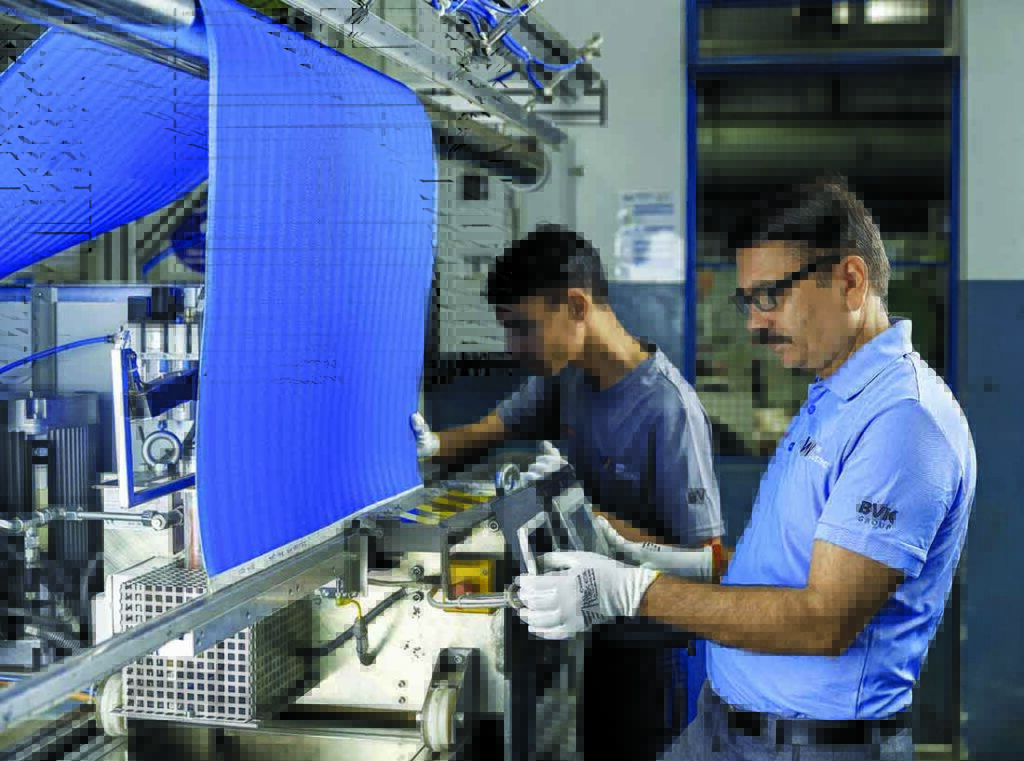
WMW produces a comprehensive range of high-performance technical meshes categorized into six functional types like filtration, separation, conveying or process belts, sifting or sieving, shielding or protection, forming or molding, and architectural meshes. These woven meshes and fabrics are engineered with precision features such as micron-rated aperture accuracy, high mechanical and thermal stability, chemical inertness, and electromagnetic conductivity.
By utilizing advanced materials, BVK ensures the meshes can withstand extreme industrial environments, from high-heat automotive and aerospace applications to chemically aggressive petrochemical filtration and green hydrogen generation.
These meshes are applied across a vast global market, in applications including water treatment for microplastics and sewage; healthcare in bioreactors; and the food and beverage industry for beverage, edible oil filtration and conveying. BVK also holds a strong presence in heavy industries like mining, pulp and paper, and automotive, providing critical components for hydraulic systems, mineral sifting, and paper forming, security watermarking, tableware, and fiber cement, among others.
Additionally, the company serves the energy and electronics sectors with specialized solutions for hydrogen electrolysis, solar cell printing, and EMI shielding for mobile devices, while the architectural line provides both functional and aesthetic solutions for modern building facades.
WMW offers a sophisticated portfolio of precision-engineered mesh products designed to transform complex industrial challenges into reliable performance. Their diverse range includes everything from continuous mesh rolls and precision-cut strips to highly specialized components like laser-cut segments, punched parts, and shaped mesh elements. For specialized industrial systems, WMW provides structural solutions such as framed filter discs, screen cylinders, and hooked screens, alongside niche innovations like diagonal sieve mold covers for the paper & fiber cement industry and molded fabrics for shaped tray production.
Combining German engineering with innovative materials — including unique hybrid mesh parts — these products are tailored to maximize flow rates and particle retention across demanding sectors like aerospace, pharmaceuticals, and large-scale water treatment and automotive applications
IFN: How has your company expanded beyond traditional weaving to create added value for customers?
Khaitan: At our core, we are precision mesh weavers, and woven filtration media defines the filtration performance of any system. While weaving forms the foundation, it is the post-weaving processes which we specialize in, to give the media its filtration ability such as heat treatment for formability, flattening for filtration efficiency, and sizing for fitments.
In recent years, we have expanded into finished filter products, allowing us to offer greater value by converting our woven filtration fabrics into ready-to-use filters. In addition, we now offer knitted filtration media in special alloys for select, demanding applications. We have invested significantly in building capabilities to manufacture specialty filters for highly demanding applications such as solar screen printing, defence, aerospace, fuel and hydraulic systems.
IFN: How does BVK Group ensure it supplies products of consistent quality?
Khaitan: We are certified under an Integrated Management System (IMS) and hold ISO 9001:2015, ISO 45001 and ISO 14001 certifications. We are also IATF 16949 certified for automotive applications and are in the process of obtaining AS9100 certification for aerospace. A robust and secure digital ecosystem enables full traceability from melt to mesh, including compliance with DFARS-regulated sourcing requirements.
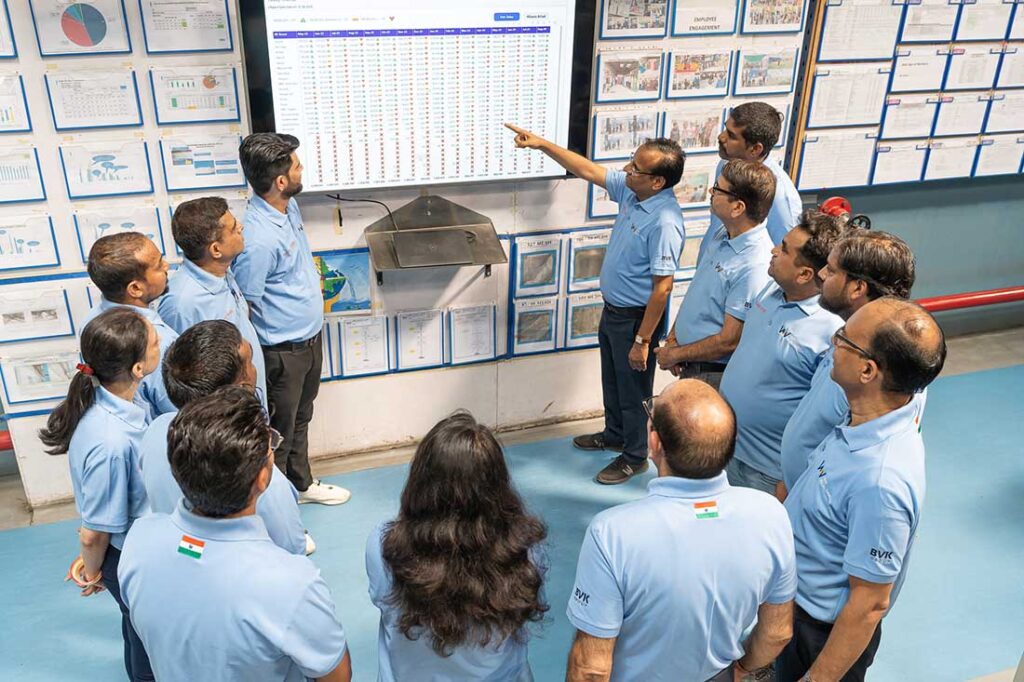
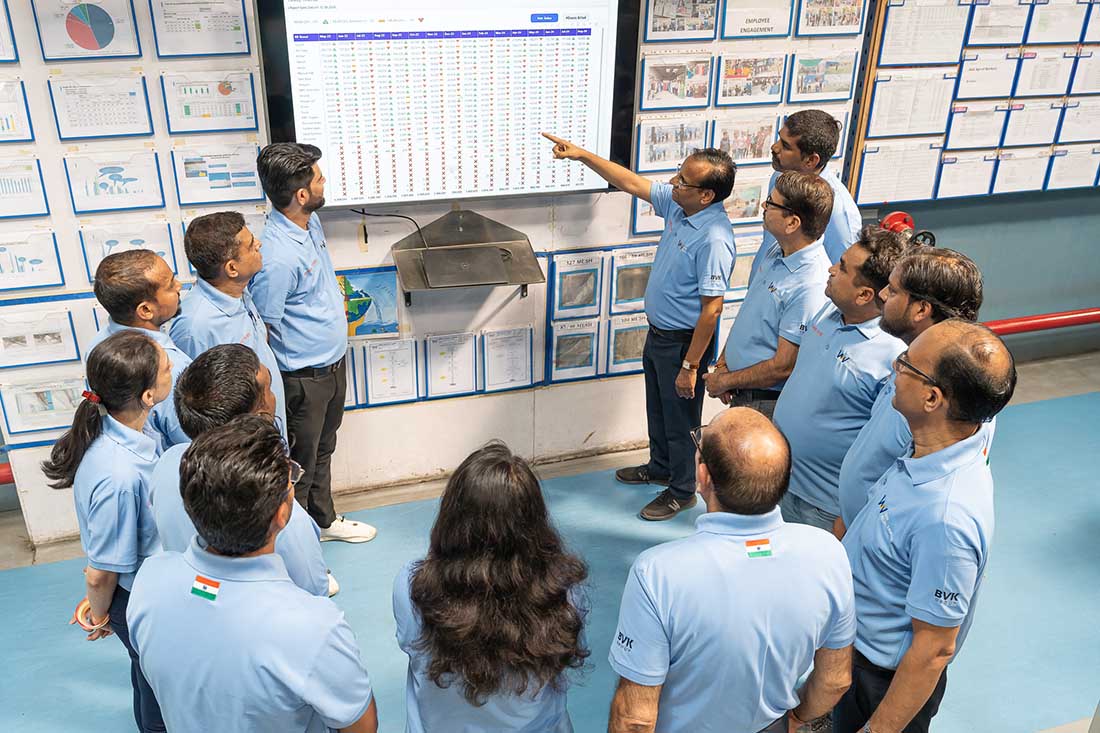
Our ability to deliver consistent quality stems from disciplined control of inputs, supplier partnerships, continual equipment upgrades — including artificial intelligence-enabled camera inspection systems — and structured workforce training. Our shop-floor and quality management systems are inspired by Japanese GEMBA principles, enabling us to consistently exceed customer-defined and ISO benchmarks.
Beyond quality certifications, we are the first wire mesh manufacturer globally to voluntarily publish a formal ESG report complying with global GRI standards. Sustainability is embedded into our manufacturing philosophy, from energy efficiency and waste reduction to responsible sourcing.
IFN: What are the advantages of the filter fabrics WMW offers?
Khaitan: The primary objective of a filter fabric is to ensure consistent and efficient filtration — retaining unwanted particulates while allowing the desired flow with optimal drainage. At WMW, we work closely with customers to fine-tune filtration fabric structures so they precisely meet application-specific requirements.
Filtration is rarely a plug-and-play solution; it requires close cooperation between supplier and customer. Our key differentiator is transparency and collaboration. We position ourselves as long-term partners, committed to developing reliable, efficient solutions through openness, technical support and shared growth.
IFN: Do you have a R&D lab to develop and innovate for new applications?
Khaitan: We have a dedicated R&D laboratory recognized by the Department of Scientific and Industrial Research (DSIR), Government of India. We also collaborate with reputed technology institutes, allowing us to access a broad talent pool for development work. This has enabled us to develop and file for several patent pending innovations. Continual efforts are made to improve existing solutions and develop new ones.
In addition, we maintain strategic partnerships with testing facilities worldwide to validate our innovations and use advanced simulation software to develop and test new solutions. We view innovation as a challenge and as a learning opportunity that strengthens us as a technology-driven supplier.
IFN: How does WMW work to solve filtration challenges?
Khaitan: Improving filtration efficiency starts with understanding flow parameters, particulate characteristics and operating conditions. We then simulate the system internally or through partner institutes before developing optimized mesh structures.
In one polymer application, filters needed replacing every 24 hours due to choking. By redesigning the media structure, we extended filter life to 36 hours. In another case, a customer required an increase in particulate recovery from 30 to 40 percent without changing micron size. Through controlled weaving adjustments, we achieved the target efficiency. In molded fiber applications, our locally developed filtration fabrics replaced imported media, improving drainage, consistency, and service life while reducing overall process water usage. Today, our meshes hold approximately 40 percent of the market share in this segment in India.
IFN: Are you planning any expansions or investments in the near future?
Khaitan: Our new 24,000 square-meter production facility including approximately 5,000 square meters of built-up area dedicated to the manufacturing of advanced filtration mesh will be completed by March 2026. This LEED Platinum-certified facility will support a dual-site manufacturing model designed to ensure continuity of supply and scalability for global customers. We are further investing in increasing our capacity for existing products too.
We are also investing in a separate 372-square-meter facility focused on specialized filters for hydraulic, oil and general filtration applications. Our continued investment in robust and secure IT ecosystem — including manufacturing execution system (MES), customer relationship management (CRM), document management system (DMS) and quality management system (QMS) — underpins our governance practices, ensuring data security, transparency and business resilience.
IFN: Can you share your thoughts on the future growth and opportunities in India, as well as in overseas markets?
Khaitan: WMW Industries has a strong presence across India, and internationally, we export to more than 25 countries serving filtration applications across North America, Brazil, Japan, Korea, Europe and Southeast Asia. Our growing export base reflects global confidence in our quality, consistency, and application-driven approach. India is expected to see sustained growth across several filtration-intensive industries, driven by increased manufacturing activity, infrastructure development, and a stronger focus on sustainability and process efficiency. As filtration requirements become more demanding, there is growing emphasis on high-quality woven filtration fabrics that deliver consistency and long-term reliability. With shifting geopolitical risks, there is a global shift where customers are seeking alternative supply chains and we at WMW can give them “Made in India” products, offering supply-chain resilience without compromising performance.
In overseas markets, particularly in Europe, North America, and parts of Asia, growth is being shaped by stricter environmental regulations, higher efficiency standards and the need for longer service life. These trends create opportunities for manufacturers that can combine application expertise, customization, and dependable global supply — areas where we see continued expansion of our international footprint.
IFN: WMW Industries will exhibit at the upcoming FILTECH in Cologne, Germany. Can you share some of your exhibit highlights?
Khaitan: At FILTECH, we will showcase filter products from our upcoming specialty filter facility, including solutions for hydraulic systems, water filtration and solid-liquid separation. We will also present newly developed hydrophobic filtration fabrics for specialized electronic applications. Through this platform, we aim to strengthen WMW Industries’ position as a reliable, solutions-driven partner for global filtration markets.