

For years, the North American HVAC air filtration market grew at an AAGR of between 2% to 3%. Similar statements could be made for both Europe and Asia. One could point to several events that helped break the industry out of its lethargic growth pattern. You could point to the advent of the internet and the sudden rise of the mega cleanrooms for chip production.
You could point to the awareness that improved filtration could increase the profitability of swine operations or the huge agricultural greenhouses. Or you could point to research showing that residential fiberglass disposable filters were insufficient to protect human health during wildfire episodes.
These were all transformative events that relied heavily on either improvements in filtration or better application of existing filtration, by necessity or by awareness. However, COVID-19 made it clear that we were not moving quickly enough to adopt best practices and fund research for future development.
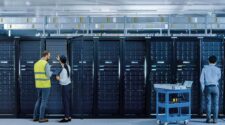
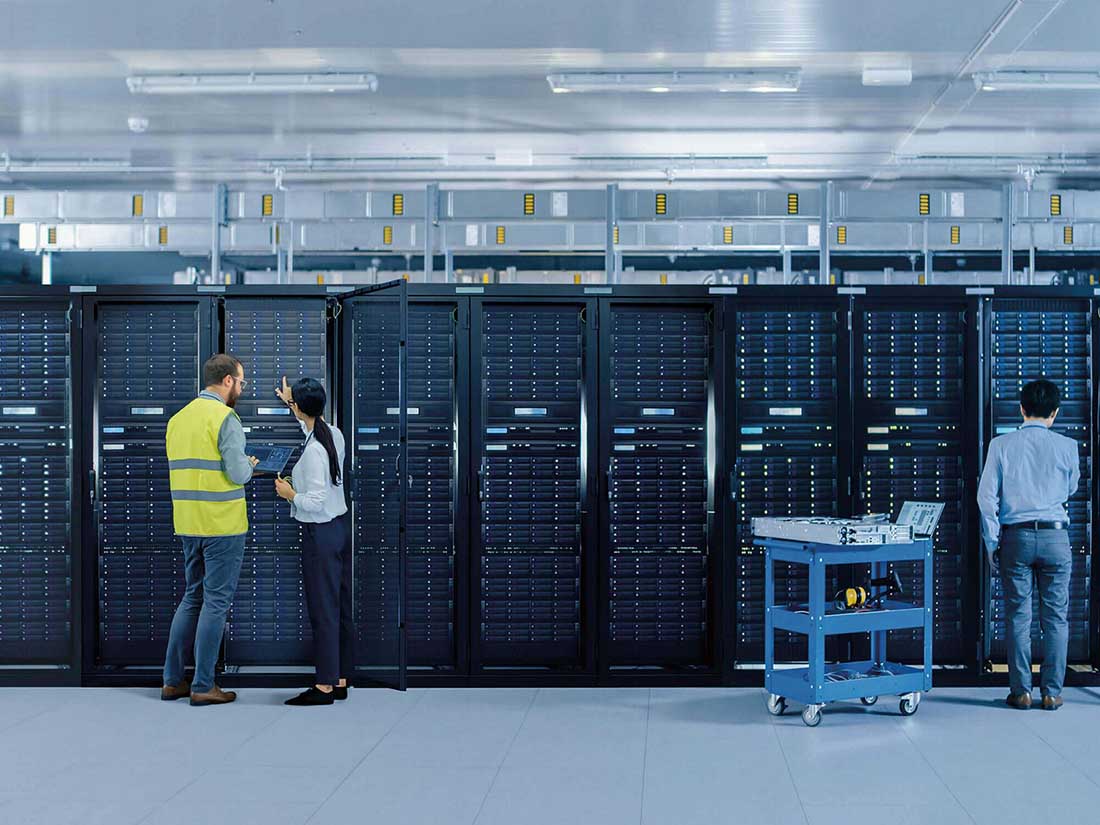
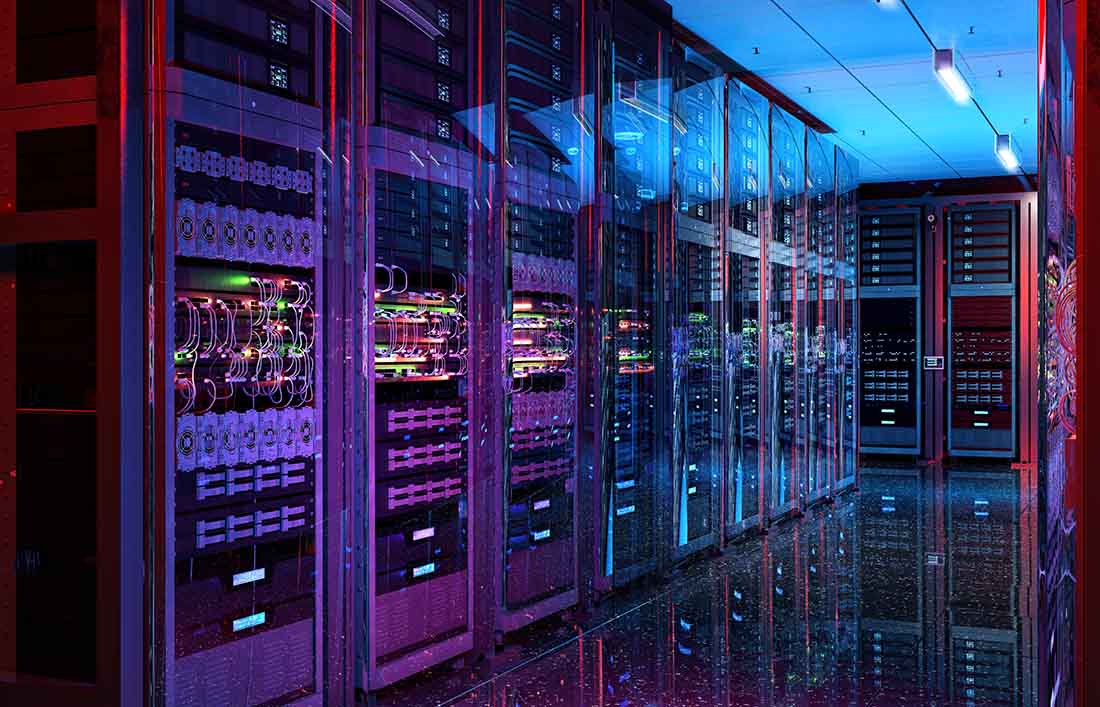
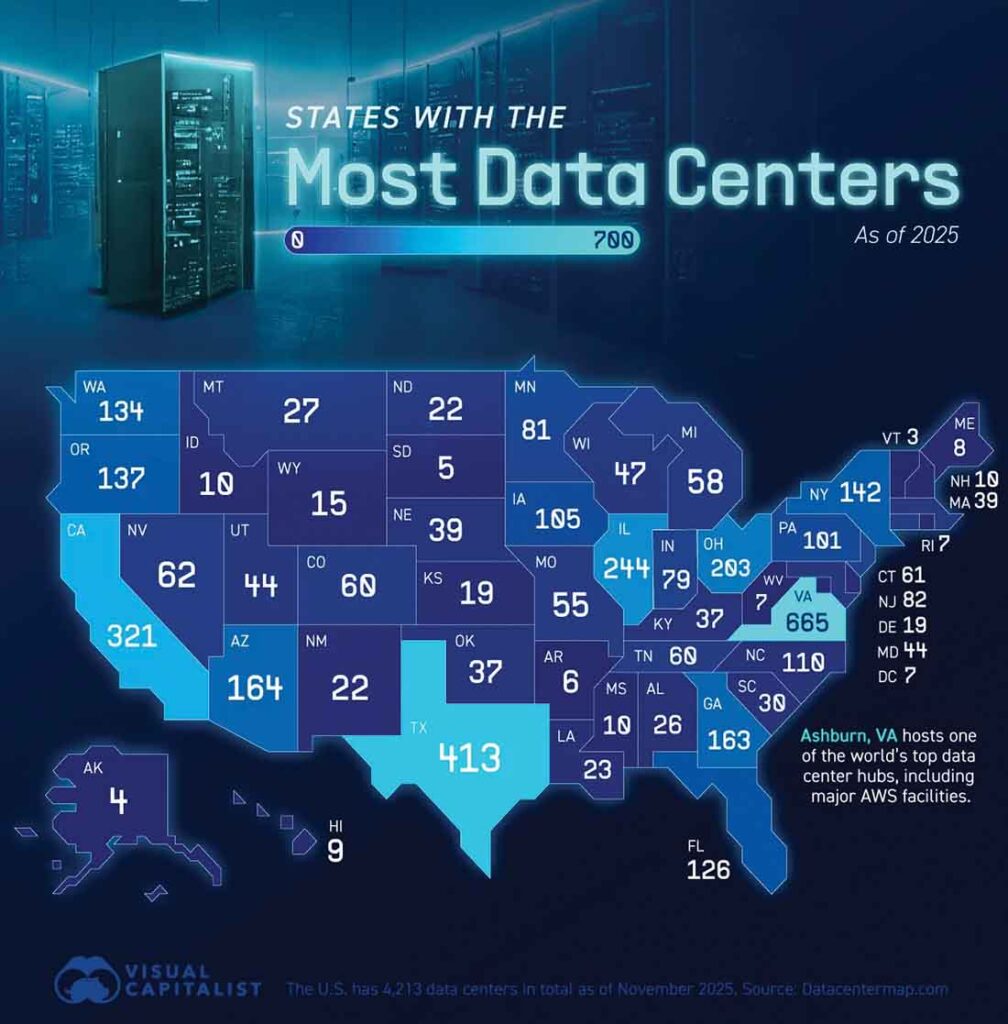
Coming into the 2020’s, we saw an accelerated growth rate in the construction of new data centers and their size. We had server rooms back in the 70s and 80s; however, we are now seeing new purpose-built data centers, some over 1m sf in size. At first, these were targeted to support cloud services and 5G needs; however, it was Artificial Intelligence (AI) that really accelerated investment in infrastructure. And air filtration was now tied directly to the design, cost, and operation of the critical use facilities.
Taking In the Numbers
It is important to understand the scale of the investment currently being made in support of AI versus business as usual if we are to plan for growth in our own industry. We all agree that it is impossible these days to read an economic newsletter or browse the internet without seeing numerous discussions about AI or data center growth. In this process, do we really stop and let the numbers sink in?
As I sit here at my computer, just a short distance away is Northern Virginia’s “Data Center Alley,” encompassing 35 million square feet of just such facilities.
Whether we are measuring CapEx or Opex, the recent growth in data centers and the associated operating expenses are having a huge impact on the world economy. Harvard economist Jason Furman recently stated that U.S. GDP growth in the first half of 2025 was “almost entirely driven by investment in data and information processing technology.”
In August, Renaissance Macro Research estimated, to date in 2025, “the dollar value to GDP growth by AI data center buildout had surpassed U.S. consumer spending for the first time ever.” That’s a profound statement, given that U.S. consumer spending typically accounts for two-thirds of GDP.
Lisa Shallet, chief investment officer for Morgan Stanley Wealth Management, wrote on September 29th that “the hyperscaler’s CapEx on data centers and related items had risen fourfold and is nearing $400 billion annually.”
Critical Energy
We will hear terms like sustainability and geographic diversity in discussions on data centers; however, don’t let these sidebars distract from what is the central focus. Energy remains at the forefront, and this is where filtration comes in.
A recent Department of Energy study, performed by Lawrence Berkeley National Laboratory, found that U.S. data center annual energy use in 2023 was approximately 176 terawatt-hours (TWh), approximately 4.4% of U.S. annual electricity consumption that year.1 Roughly one-half or greater of the electrical power demand of data centers stems directly from the operation of electronic IT equipment.2 Much of the rest is for cooling.3
Servers generate large amounts of heat, and since data centers are designed for high-density server arrangements, there is a need for tremendous volumes of conditioned air. This conditioned air has to be filtered for both particulate and molecular contaminants. Particulate contaminants build up on components, creating insulating layers that lead to overheating and premature hardware failure. Gaseous contaminants such as sulfur oxides and nitrogen oxides can cause corrosion, leading to premature failures and shortening the life of servers.
Efficiency Requirements
Power Usage Effectiveness (PUE) is the most critical metric for data center efficiency. The goal is 1.0, which in this case means all the energy goes into running IT equipment rather than cooling.4 As this relates to filtration, a number of factors come into play. High-efficiency filtration often requires more fan energy but results in fewer failures by removing smaller particulates, thus decreasing downtime and increasing hardware life.
Filters with longer useful lives may be more expensive but require less downtime for changeouts and service. One filter may start out with a lower pressure drop but load prematurely, resulting in higher energy costs, while another filter with a higher initial pressure drop may load more efficiently and maintain a lower static curve, resulting in overall lower operating costs. So there are already an almost infinite number of variables at play, even before we take into account that requirements may vary by location and cooling type.
Industry Responds
I have posed seven questions to four filtration experts from AAF, Camfil, MANN+HUMMEL and RENSA. Each is well-known in the industry. These interviews touch on a number of topics which are filtration-related, such as what are specific performance requirements are and what we can expect in the not-too-distant future.
I have left the debate on air cooling versus liquid cooling to the Mechanical Engineers. And the debate over whether rapid growth and huge investments are creating a bubble, I leave to our economists. As for the filtration side, read on to learn what these experts see.
References:
1 Shehabi et al., 2024 United States Data Center Energy Usage Report (LBNL report), p. 5.
2 Shehabi et al., 2024 United States Data Center Energy Usage Report (LBNL report), p. 47.
3 For more information on the use of CPUs and GPUs in data centers, see CRS In Focus IF12899, Data Centers
and Cloud Computing: Information Technology Infrastructure for Artificial Intelligence, by Ling Zhu.
4 DataCenters.com Colocation, “Top 5 Metrics Every Data Center Operator Should be Tracking in 2025,” March 10, 2025.
Also read: