

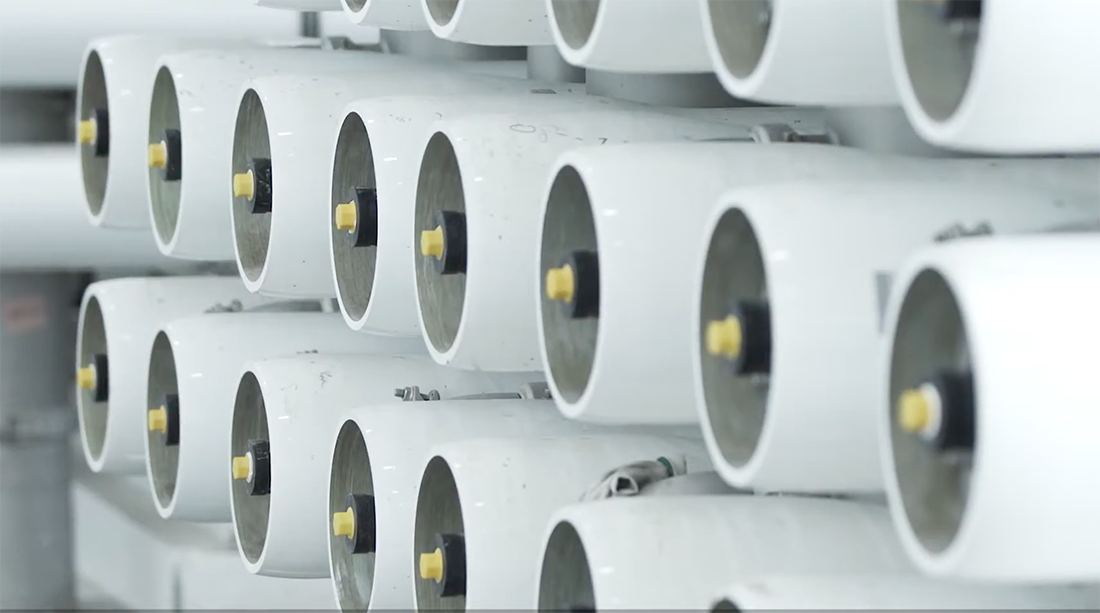
DuPont has launched a new low-energy, fouling-resistant reverse osmosis (RO) element designed to improve the efficiency and reliability of seawater desalination systems. FilmTec™ SW30XLE-400/34 RO element directly targets biofouling, which is one of the most persistent and costly operational challenges in seawater reverse osmosis applications. By targeting fouling at the membrane level, DuPont seeks to help desalination facilities lower energy consumption, reduce maintenance requirements, and extend membrane life.
Biofouling in seawater RO systems can often lead to higher pressure drops, increased energy use, and more frequent chemical cleanings, reducing overall system efficiency. DuPont says the new FilmTec SW30XLE-400/34 element has been specifically engineered to mitigate biofouling effects while preserving the high performance and reliability associated with its FilmTec membrane portfolio.
DuPont conducted extensive validation studies at its Global Water Technology Center in Tarragona, Spain, and these tests evaluated the new RO element under typical seawater operating conditions. According to DuPont, the FilmTec SW30XLE-400/34 delivers up to 25% lower initial pressure drop compared with the previous generation.
The reduced pressure drop translates directly into improved energy efficiency and operational stability. In addition, the design helps limit fouling buildup, which in turn can lower cleaning frequency and minimize downtime. These advantages are particularly significant for large-scale seawater desalination plants, where energy consumption and membrane maintenance account for a substantial share of total operating costs.