

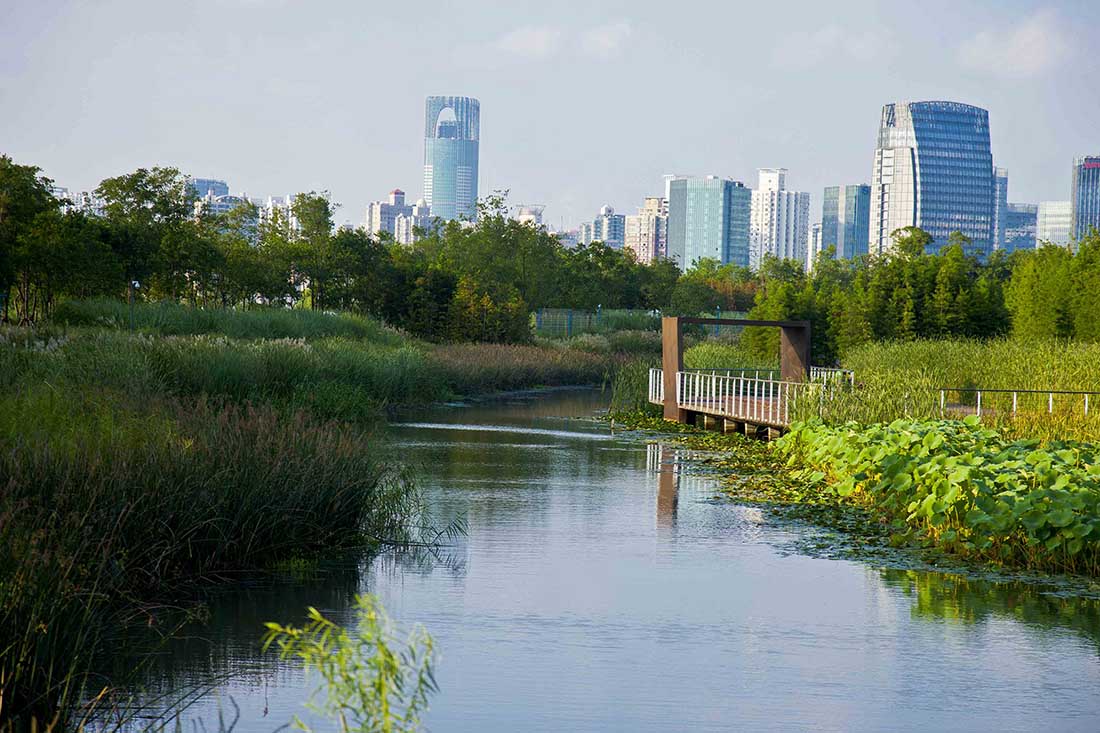
For the 2010 World Expo in Shanghai, landscape architect Kongjian Yu designed Houtan Park as what he described as a “regenerative living landscape”.
Built on the polluted remains of a former steel factory and shipyard along the Huangpu River, the 35-acre park demonstrated that ecological repair, flood control and public space could be delivered simultaneously rather than in competition. Yu, who sadly passed away last year, was not just designing a park, but articulating a philosophy.
As a professor at Peking University in Beijing and later at Harvard University, and as the founder of the architectural design house Turenscape, Yu is widely credited with helping to catalyze the thinking behind China’s “Sponge City” program. His core insight was deceptively simple — urban resilience is not achieved by forcing nature into rigid systems, but by allowing cities to absorb, store and adapt to natural processes. That idea has since reshaped how China approaches water at the scale of entire metropolitan regions.
Slowing Water Down
The Sponge Cities program represents one of the most ambitious attempts anywhere in the world to rethink urban water management. Instead of channeling rainfall rapidly into concrete drains and underground pipes, Sponge Cities are designed to slow water down, cleanse it and reuse it where it falls. Permeable pavements, sunken green spaces, wetlands, green roofs and restored waterways work together to absorb stormwater, reduce peak runoff and improve water quality. Groundwater is recharged, urban heat is mitigated and flood risk is reduced not through resistance, but through integration. In effect, the city itself becomes a filtration and renewal system.
China’s speed and scale of implementation have been striking. Dozens of pilot cities, including Wuhan, Shenzhen and Xiamen, have tested the approach across new developments and dense historic neighborhoods alike. While challenges remain, particularly around maintenance, financing and the retrofitting of legacy infrastructure, Sponge City principles have already been embedded into national planning standards and design practice. More broadly, they signal a shift in mindset, one that increasingly resonates far beyond China.
Wastewater
That same systems thinking has also shaped China’s approach to wastewater over the past decade. Wastewater treatment has become one of the most visible and measurable fronts in the country’s wider war on pollution, to the point that urban coverage is now close to universal. This transformation did not happen by chance. The 2015 Water Ten Plan provided political momentum and a clear compliance signal, tightening discharge standards, strengthening river basin management and accelerating enforcement.
Substantial multi-year investment through the late 2010s and early 2020s followed, expanding treatment capacity while driving upgrades in operational performance. Crucially, wastewater has increasingly been reframed not as a standalone utility function, but as a core component of urban resilience and water security. Sponge City measures, rainwater harvesting and wastewater reuse schemes now sit within a single conceptual framework that links drainage, treatment, reuse and environmental quality. The challenge for the coming decade is clear — treatment outcomes must continue to improve, but with lower energy use, reduced emissions and greater operational reliability.
Rapid Expansion
It is within this context that digitalization and artificial intelligence (AI) are beginning to play a decisive role. Wastewater treatment plants are complex, variable systems, influenced by fluctuating inflows, changing pollutant loads and ageing assets. Traditionally, their performance has depended heavily on experienced personnel — from process technicians and field inspectors to maintenance crews. That dependence increasingly represents a vulnerability, as ageing workforces, skills shortages and rising regulatory pressure converge.
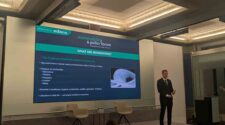
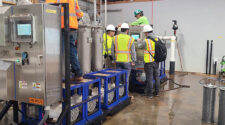
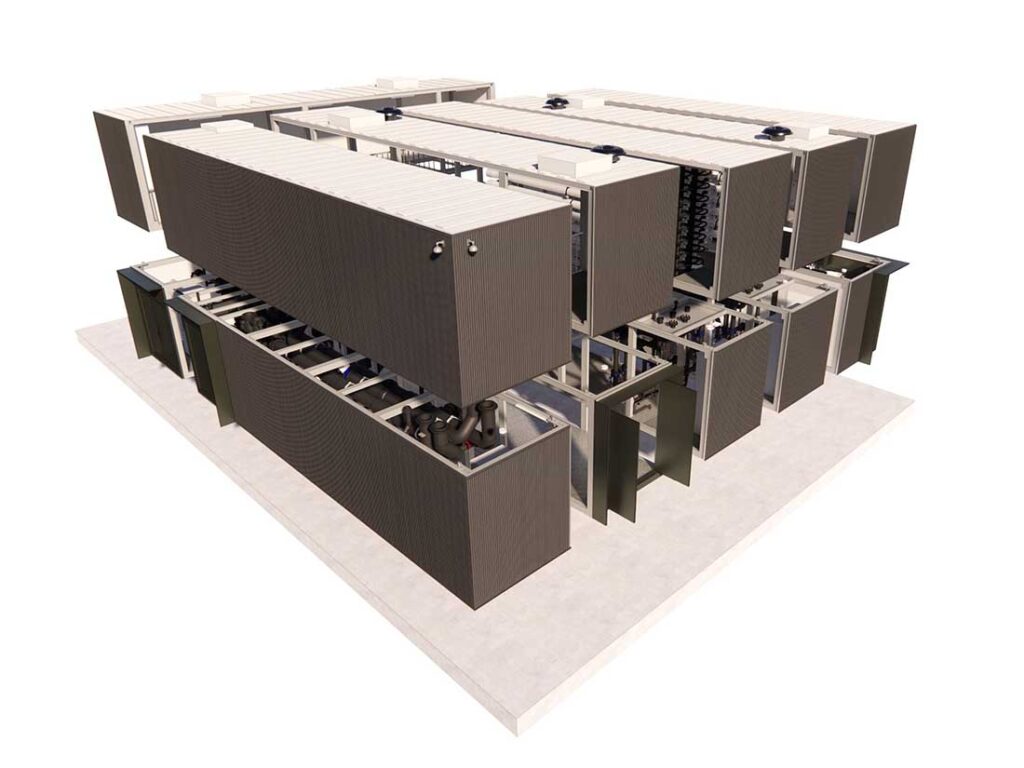
Beijing-headquartered GreenTech Environmental Co. Ltd. has spent the past two decades working across this evolving landscape as a membrane systems integrator and wastewater treatment specialist. Since 2017, the company has pioneered the use of digital twin technology based on Building Information Modeling (BIM), initially to optimize membrane system performance and reduce operating costs. In 2023, this capability was expanded to cover full-plant operations, integrating real-time monitoring, predictive maintenance and process simulation across critical systems, including its modular Newater House treatment solutions.
Critical Need
The next step has been the integration of artificial intelligence. In 2025, in collaboration with DeepSeek, GreenTech embedded its Waterbot AI agent into its digital twin platform, combining multi-modal AI models with the company’s accumulated operational knowledge. The objective was not automation for its own sake, but the creation of treatment plants capable of adaptive, autonomous decision-making under real-world conditions.
Growing regulatory demands, higher reuse targets and increasing operational complexity are accelerating the need for AI-powered digital solutions that can deliver consistent effluent quality at lower cost and with fewer human interventions. Conventional wastewater plants typically rely on layered human oversight, from process control to field inspection and maintenance, creating exposure to response delays, inconsistency and safety risks. These pressures are being intensified by the retirement of experienced personnel, in China as elsewhere.
Complexity
Wastewater treatment is inherently complex, shaped by biological, chemical and mechanical interactions alongside external variables that are difficult to predict. This complexity, however, also creates an opportunity for digital transformation. AI-driven automation, enabled by IoT sensors and supervisory control and data acquisition (SCADA) systems, allows real-time optimization with a level of accuracy and responsiveness that manual control cannot match. Advanced analytics further support predictive maintenance and intelligent operational adjustments, improving efficiency and reliability across the treatment cycle.
By integrating artificial intelligence with digital twins and IoT connectivity, the Waterbot AI agent provides holistic operational oversight of membrane systems, computer vision-based risk monitoring and enhanced automation across plant and field operations. Rather than replacing human expertise, the system codifies it, making high-level operational intelligence continuously available.
Benefits
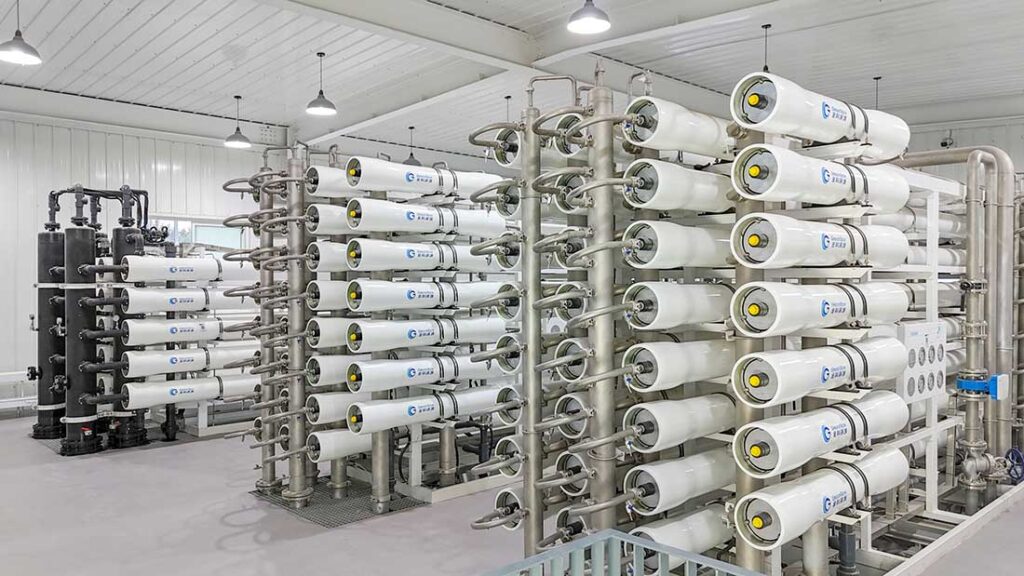
Fouling and scaling, energy consumption and operational inefficiencies remain the most persistent challenges in ultrafiltration (UF) and reverse osmosis (RO) membrane systems used for wastewater reuse.
Fouling — the gradual accumulation of organic matter, biofilms, suspended solids and mineral scale on membrane surfaces — remains the most persistent challenge. Scaling, meanwhile, occurs when dissolved inorganic minerals such as calcium and magnesium salts precipitate and deposit on membrane surfaces, forming hard layers that restrict flow and reduce treatment efficiency.
The Waterbot AI agent incorporates a smart membrane module that applies deep learning to predict the evolution of critical operational parameters, particularly in respect of fouling and scaling. This allows cleaning-in-place strategies to be planned proactively, based on evidence rather than reaction, protecting membrane life and preventing unexpected shutdowns.
Automated remote inspections are also becoming increasingly important for plant safety. Through AI-powered computer vision and sensor-based surveillance, the system can detect leaks, abnormal temperatures, smoke, open flames or unusual vibrations at an early stage. Early risk identification reduces intervention delays and supports the more efficient deployment of emergency resources.
In parallel, intelligent field management functions enable anomalies detected by the digital platform to trigger automated work orders matched to technician location and expertise. This reduces reliance on manual coordination and improves response times for on-site repair. Integration with DeepSeek’s large language model further allows operators to interact with the system using natural language, lowering the skills barrier for routine operation and maintenance.
Connectivity
Since early 2025, these capabilities have been deployed across five wastewater treatment plants in Wuxi, operated as a single, centrally managed cluster. The facilities run under unattended operation, with treatment processes and assets continuously monitored and optimized by AI-powered analytics. According to GreenTech, labor costs have been reduced by 58 percent, while energy consumption has fallen by 12.7 percent.
In many respects, this evolution mirrors the logic of Sponge Cities themselves. Just as Kongjian Yu argued that cities must work with natural systems rather than against them, digital water infrastructure is increasingly designed to work with complexity rather than suppress it. Intelligence, adaptability and integration are replacing rigidity at every scale, from landscapes and drainage networks to treatment plants and control rooms.
As GreenTech looks beyond China, seeking partners to localize its digital solutions in international markets, the broader implication is clear. China’s experience is no longer only about capacity or speed of delivery. It is about how systemic thinking — applied consistently from urban design to plant operations — can redefine what resilience looks like in a water-stressed world.