

End-Use Markets
Cost-efficient, tailor-made water treatment for power plants

The appearance of the specialty chemicals group LANXESS at the annual “Chemistry in Power Plants” conference of VGB PowerTech e. V. and the trade exhibition held in parallel from October …
Automotive filter aftermarket to exceed $4 billion by 2021
Oil filters comprised the largest share of the North American automotive filter aftermarket Aftermarket demand for automotive filters in North America is forecast to advance 2.4% per annum through 2021 …
Fundamentals for cleaner and healthier air
A World Bank study maintains that air pollution costs the world trillions of dollars a year and contributes to the premature death of millions of people a year around the …
Parker Hannifin to buy filtration maker Clarcor, deal valued at $4.3B
Industrial conglomerate Parker Hannifin Corp. said it would buy filtration maker Clarcor Inc. for about $4 billion. Parker Hannifin is paying $83 a share, an 18% premium to Clarcor’s closing price on November 30, 2016. The …
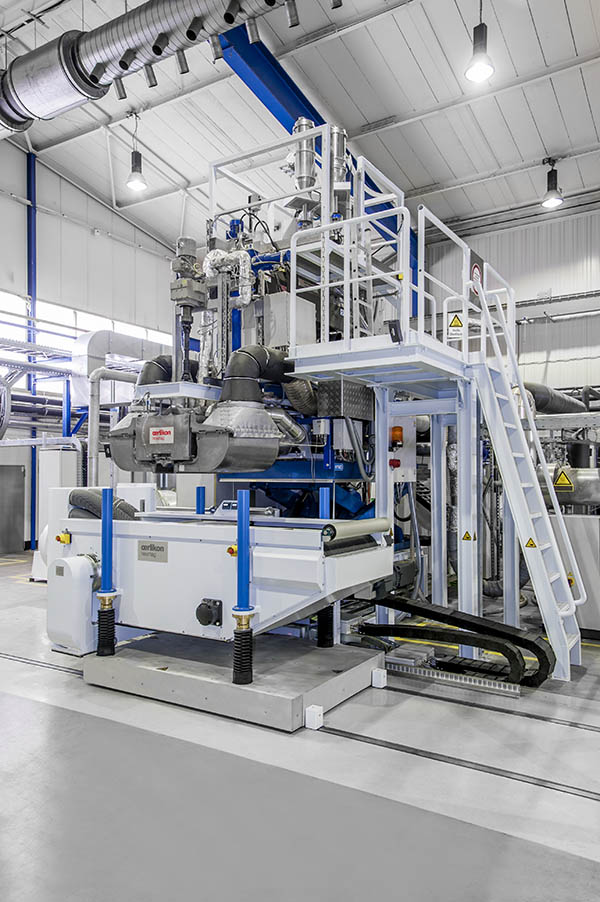
Efficient, flexible and economical – meltblown technology for high-performance filtration
Almost 500,000 tons of nonwovens are currently used annually in the production of filters, which corresponds to approximately 10% of current worldwide industrial nonwovens manufactured. Here, the filter market is split into two areas: air and liquid filtration. While in excess of 170,000 tons of nonwovens were manufactured for gas/air filters in 2015, the volume for liquid filters was almost double at around 295,000 tons.
Depending on the specific application, the demands on filters are extremely high. To this end, high-efficiency particulate air filters for clean rooms must, for example, filter < 1µm particles from the air with virtually 100% efficiency. Filters must achieve their separation performance with the lowest possible pressure drop – in other words, filter resistance. Pressure drop is one of the most important quality features of filters: the lower the pressure drop, the more energy efficient the filter of the corresponding filter class is. A good example is vacuum cleaner filters. The class in the case of vacuum cleaners depends on the energy consumption, which is also influenced by the vacuum cleaner filter. If the filter is too dense, the vacuum cleaner draws more electricity and the energy consumption increases.