

Drexel University is embarking on a three-year, $5-million multinational collaboration to produce MXene nanomaterials. The project, which is a collaboration with Kalifa University in the United Arab Emirates, the University of Padua in Italy and the Kyiv, Ukraine-based MXene manufacturing company Carbon-Ukraine, seeks to use the promising nanomaterial, first discovered at Drexel, to provide clean drinking water for arid areas of the world and improve cell labeling and tracking technology for biomedical analysis.
Drexel’s collaboration, MX-Innovation, is part of a broad initiative, funded by Kalifa’s Research & Innovation Center for Graphene and 2D Materials (RIC2D), to translate two-dimensional materials into commercial innovations in areas that include water treatment, energy, health care, and technology infrastructure, among others.
“We are thrilled to begin work on this exciting project,” said Yury Gogotsi, PhD, Distinguished University and Charles T. and Ruth M. Bach professor of Materials Science and Engineering in Drexel’s College of Engineering, and director of the A.J. Drexel Nanomaterials Institute, who is heading the project.
Gogotsi and his collaborators in Drexel’s College of Engineering have been studying MXenes, a family of two-dimensional nanomaterials they discovered in 2011, and testing them in a variety of applications, from telecommunications to energy storage to electromagnetic shielding. This two-dimensional nanomaterial has proven to be exceptionally versatile and easy to integrate into existing technologies because it can be produced in dozens of different chemical configurations, which allows researchers to optimize for each application.
While the material boasts more than 70 patents and has been licensed by the Japanese company Murata Manufacturing Company for development in electronics-related applications, its broad commercialization has been slowed by the lack of a commercial-scale production of materials designed for specific applications – an impediment that the MX-Innovation team aims to remove by 2028.
An effort like this to boost the availability of MXenes could enable their widespread use for industrial applications, as well as academic research, according to Gogotsi.
Making More Drinking Water
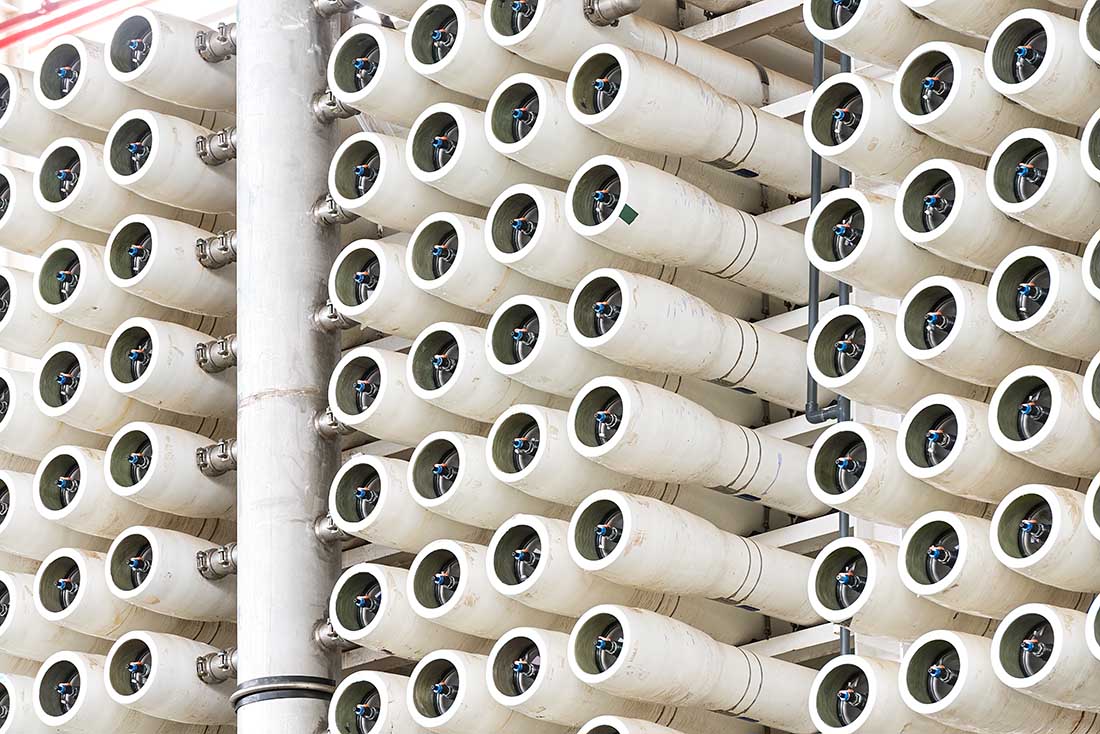
MXenes have already demonstrated an exceptional acuity for liquid filtration and ion separation. The nanomaterials’ layered structure and adjustable chemical composition allow them to be customized for straining a wide variety of ions or chemicals out of a solution. MX-Innovation will harness this capability as it designs a pilot-level device that can turn salt water into drinking water using a physical and electrochemical filtration process.
The UAE already produces 42% of its drinking water through desalination, primarily via an energy-intensive process involving evaporation and condensation of water. But producing more potable
water is quickly becoming a priority for large swaths of the world, with some estimates suggesting more than 844 million people do not have access to clean drinking water, and many have to travel long distances to find it.
MXenes have already demonstrated an exceptional acuity for liquid filtration and ion separation. The nanomaterials’ layered structure and adjustable chemical composition allow them to be customized for straining a wide variety of ions or chemicals out of a solution.
Drexel researchers have conducted preliminary research in using MXenes for desalination, which has already shown promising results. Focusing on this goal as part of the initiative could speed progress toward the development of a hybrid capacitive deionization (HCDI) technology. It could also reveal other desalination methods that may benefit from the use of MXenes.
“Our preliminary results show that the MXene electrodes with bi-stacked architecture exceed the salt removal performance demonstrated by nanostructured carbon electrodes,” said Yuan Zhang, PhD, a Humboldt Fellow and postdoctoral researcher in the Nanomaterial Institute, who will be helping to lead the group’s desalination research.
Getting a Clearer Look at Cells
The second goal of the MX-Innovation team is to develop MXenes as a cell labeling technology that could improve early detection of cancers, outcomes for transplant patients and possibilities for tissue regeneration.
MXenes will be developed and tested for use in a cell analysis technique, called Cytometry by Time of Flight (CyTOF), that uses metal materials as tags or labels on the surface and interior of cells to observe and quantify their behaviors and study the interactions of proteins, carbohydrates or lipids within a cell.
This is another area where the multifaceted MXenes have the potential to expand current capabilities. Over the years, Drexel researchers, in collaboration with Lucia Delogu, PhD, from Khalifa University and Laura Fusco, PhD, a Marie Curie Fellow and former postdoctoral researcher in the Drexel Nanomaterials Institute, from the University of Padua; have refined the process of making the nanomaterials to the point that they can uniquely tailor a flake of MXene to latch onto nearly any type of cell – and even the organelles inside cells.
Because MXenes are nontoxic and readily detectable by mass spectrometry technology, they are prime for use in this type of biomedical analysis. And the MX-Innovation team has taken the first steps toward a pilot technology that could be improved as part of this effort.
The Goal in Sight
By the end of the project, the team aims to scale up its MXene production and lay the groundwork for a commercial manufacturing facility for the products created by this collaboration.
Carbon-Ukraine will focus on developing a process for low-cost synthesis of MAX Phase – the precursor ingredient for MXenes – which will enable their production at an industrial scale. While this process has been demonstrated and tested to ensure the properties of the MXene are not affected when they are produced in large quantities, it has not yet been implemented in a dedicated manufacturing facility.







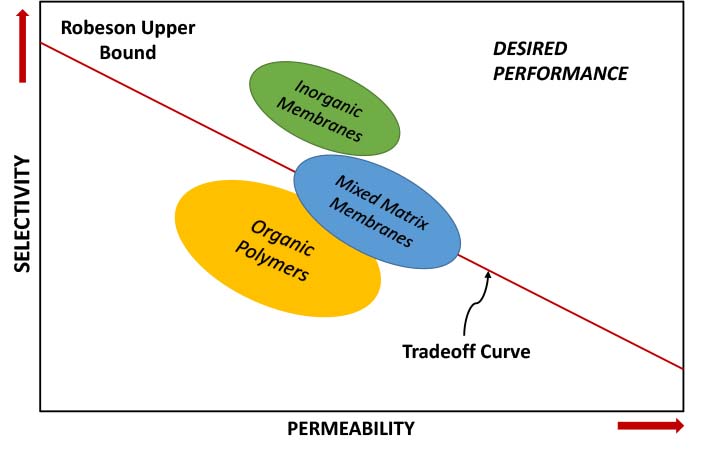
![Figure 1: Differentiation with membranes based on the famous Robeson diagram that plots selectivity vs. permeability. From Reference. [4]](https://www.filtnews.com/wp-content/uploads/IFN_042023_membranes_Figure1-225x125.jpg)