

Why funnel billions into building skyscrapers that generate only rental revenue, when we could invest in crafting thriving, enduring neighborhoods that cultivate long-term human health and collective well-being as our greatest return on investment? The proposed transformation, as suggested by Dr. Iyad Al-Attar, is a three-part blueprint for change: harnessing technology and governance to drastically improve air quality; fundamentally redesigning urban centers to become “healthy habitats;” and reorienting the economy to define success through collective well-being rather than financial metrics.
In the relentless march of progress, humanity has achieved wonders, transforming forests into cities as we rapidly urbanize. Yet current progress is primarily driven by the pursuit of profit and the dictates of business models, inadvertently creating a precarious existence for countless lives and the planet itself. We stand at a crossroads where the fundamental question arises: should our energy be spent perpetuating economic systems that prioritize financial gain, or should it be unequivocally directed towards the preservation of every single life, even if it means radically altering our business models and reimagining the fundamentals of our built environments? We ought to assert that every life is worth the energy it takes to save it, advocating for a future in which public health and well-being drive the design of our modern world.
The prevailing global economic system, while fostering innovation and generating wealth, often operates with a dangerous disregard for its collateral damage. Industries pollute our air and water, extract resources uncontrollably, and create products with planned obsolescence, all in the name of economic growth. The actual cost of these activities, measured in human lives lost to preventable diseases, ecosystems destroyed, and the accelerating climate crisis, fails to appear on corporate balance sheets. It is the norm to witness business models dictating our energy consumption, transportation choices, and even the quality of the air we breathe—a profound misallocation of our collective energy and ingenuity.
Imagine a world where the paramount objective is not quarterly profits but the safeguarding of human life and the health of our planet. This requires a fundamental paradigm shift, a re-evaluation of our values in which the intrinsic worth of a human life outweighs any potential financial gain, and where energy savings achieved without the loss of any lives would win an energy-efficiency award. Attaining and delivering fit-for-purpose filtered air in buildings designed with the premise of safeguarding public health and well-being may sound utopian—but it is not. It is rather a moral imperative, an actionable framework that demands our immediate attention and concerted effort.
One of the most immediate and tangible areas where this shift is desperately needed is in addressing environmental pollution, particularly air quality. Anthropogenic pollution from industrial emissions, vehicular exhaust, and power generation contributes to seven million premature deaths globally each year and exposes 99% of us to poor air quality, according to the World Health Organization1.
These are not inevitable tragedies; they are preventable outcomes of business models that externalize their environmental costs. The energy currently expended on maintaining these polluting industries should be redirected towards implementing robust, efficient, and appropriate filtration solutions. This means investing heavily in technologies that capture and neutralize harmful airborne particles and gases at their source, from industrial smokestacks to urban centers. The larger energy shift involves a rapid transition to cleaner production methods, a full commitment to renewable energy sources, and a complete revolution of public transportation networks to significantly reduce fossil fuel reliance in our cities.
Enhanced Air Quality Governance: Beyond Technology
A commitment to saving lives requires a comprehensive air quality governance framework that extends far beyond technological and hardware fixes. This commitment necessitates establishing stringent regulations, continuous monitoring, and transparent reporting mechanisms. Governments must shift their role from merely facilitating industrial growth to becoming staunch guardians of public health. This is anchored by independent regulatory bodies empowered to enforce compliance, impose penalties for violations, and hold corporations accountable for their environmental impact.
The Power of Closed-Loop Regulation
The foundation of modern air quality management lies in sophisticated, real-time, data-driven reporting systems that incorporate a crucial feedback mechanism: they must loop back into the system to regulate issues. These systems—which include continuous monitoring of ambient and indoor air quality—are not just data-collection tools; they represent a closed-loop governance model.
The instant that high pollution levels are detected, the data flow triggers an immediate operational or regulatory response. Indoors, this might mean automatically realigning air filters to regain compliance. Outdoors, the system facilitates rapid, preemptive measures such as issuing pollution alerts, enforcing traffic restrictions, or ordering temporary industrial shutdowns. This focus on instantaneous feedback and self-correction is critical for transforming air quality governance from a slow, reactive system based on retrospective penalties into one capable of proactive, immediate regulation to safeguard public health.
Public Empowerment and Accountability
Finally, the success of this system relies on public support and accountability. Public education campaigns are vital to empower citizens with knowledge about air quality and its impact on their health. An informed citizenry fosters a powerful collective demand for cleaner environments, ensuring that regulators and corporations remain accountable to the public they serve.
The concept of “every life is worth the energy it takes to save it” also extends to our built environment. For too long, urban planning and architectural design have been driven by energy efficiency, aesthetics, and cost-effectiveness, while often overlooking the profound impact these choices have on human health and well-being. We need to position public health as the primary driver of the modern and future design of our built environment, moving beyond mere compliance with building codes and embracing a holistic approach that prioritizes fresh air, natural light, green spaces, and sustainable materials.
“The air quality missteps of the past are not dismissed as failures; they serve as essential data and powerful lessons that actively tweak future road maps toward sustainability.”
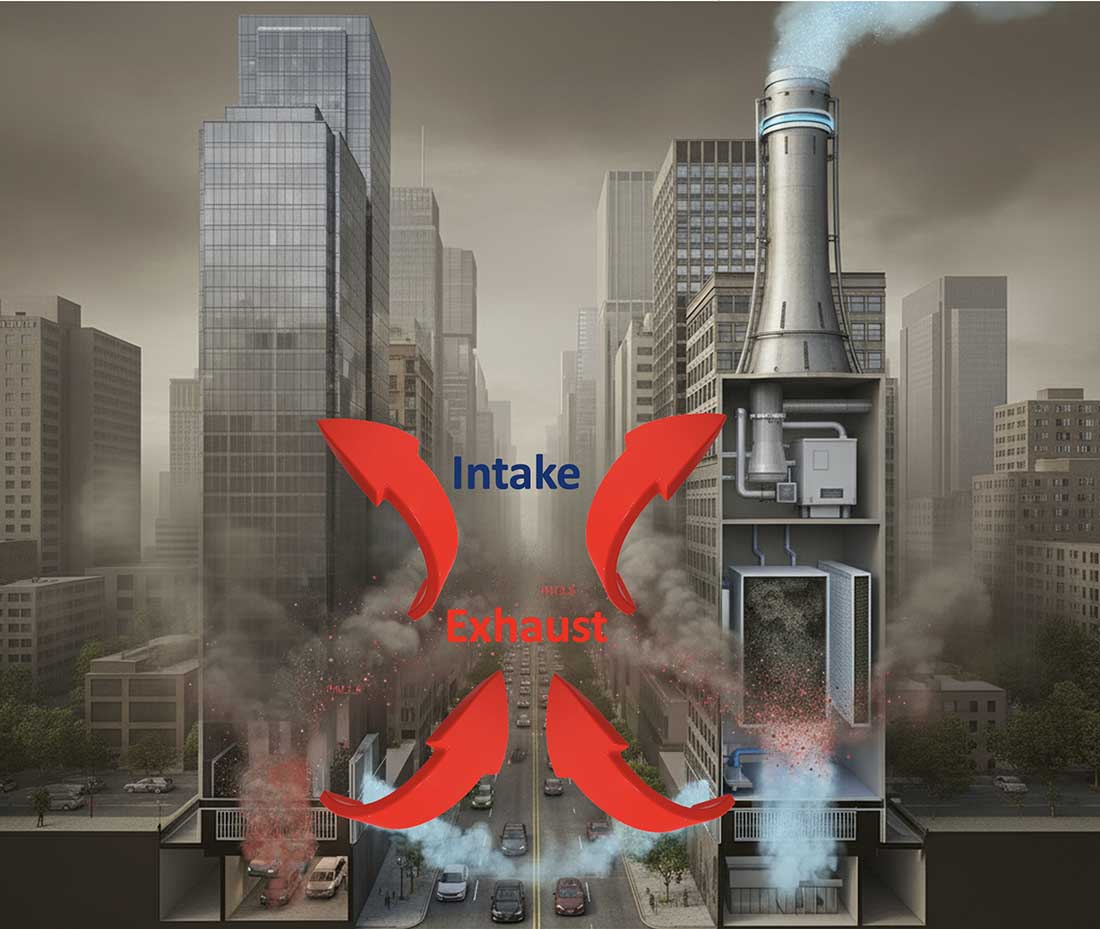
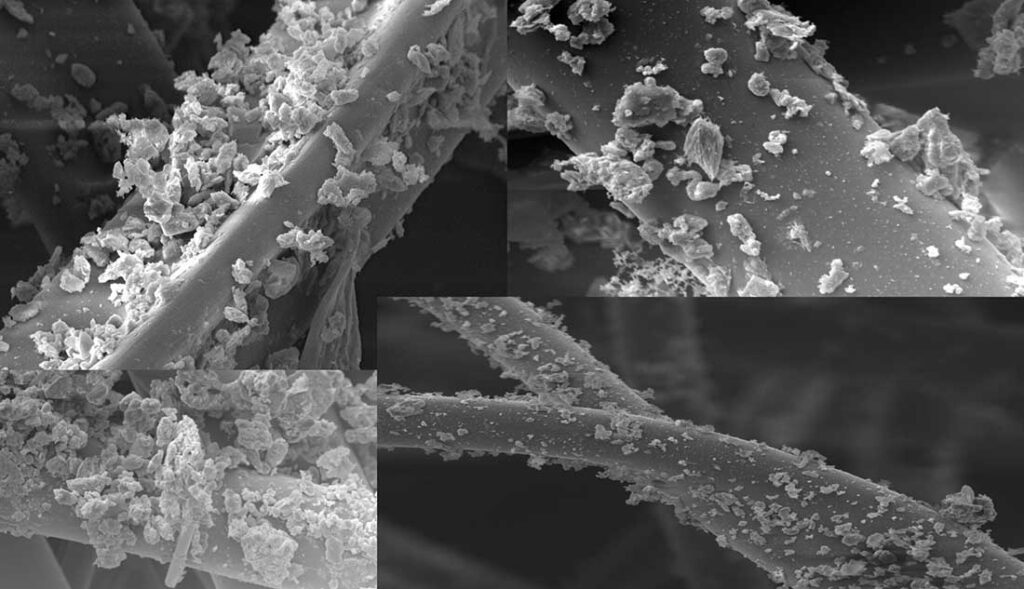
Consider the design of our modern cities. Densely packed concrete cores, often devoid of adequate ventilation and green infrastructure, exacerbate the urban heat island effect and trap pollutants. These systemic failures have created polluted street canyons (Figure 1)—transforming outdoor air into an indoor hazard that challenges the limits of our current filtration technology (Figure 2). We are now called to reimagine and rebuild our built environments. We possess the ingenuity to transform outdated architectures into healthy, breathing habitats, where the air itself stands as a testament to our commitment to human flourishing.
The Flawed Promises of Massive Tree-Planting and Air Filtration
On an urban scale, a holistic public health approach is superior to relying solely on single-action climate remedies. This strategy centers on creating walkable, cyclable cities with extensive public transit and abundant green spaces, which inherently promote physical health, reduce stress, and improve air quality.
In contrast, tree-planting is often championed as a simple solution because trees absorb carbon dioxide via leaf stomata; however, high concentrations of pollutants such as ozone, sulfur dioxide, and nitric oxide force trees to close these valves, drastically reducing photosynthesis and thus crippling their ability to sequester carbon.
This biological paradox is compounded by moral hazard, where relying on offsetting schemes like mass tree-planting provides a “license to pollute,” distracting from the necessary, systemic task of immediate emissions reduction at the source. On a building scale, buildings must be reimagined as healthy habitats by designing for optimal Indoor Environmental Quality (IEQ), specifically engineering superior air quality, thermal comfort, noise control, and lighting. However, a singular reliance on technological fixes, such as the prolific production of air filters, represents a flawed approach. It is akin to “training the wrong muscle” or solving the wrong sustainability problem. The fundamental challenge is not merely how to filter pollutants indoors; it is ecocide—the systemic planetary damage caused by unsustainable anthropogenic emissions and consumption, which no amount of localized filtration can ultimately solve (see Figure 3).
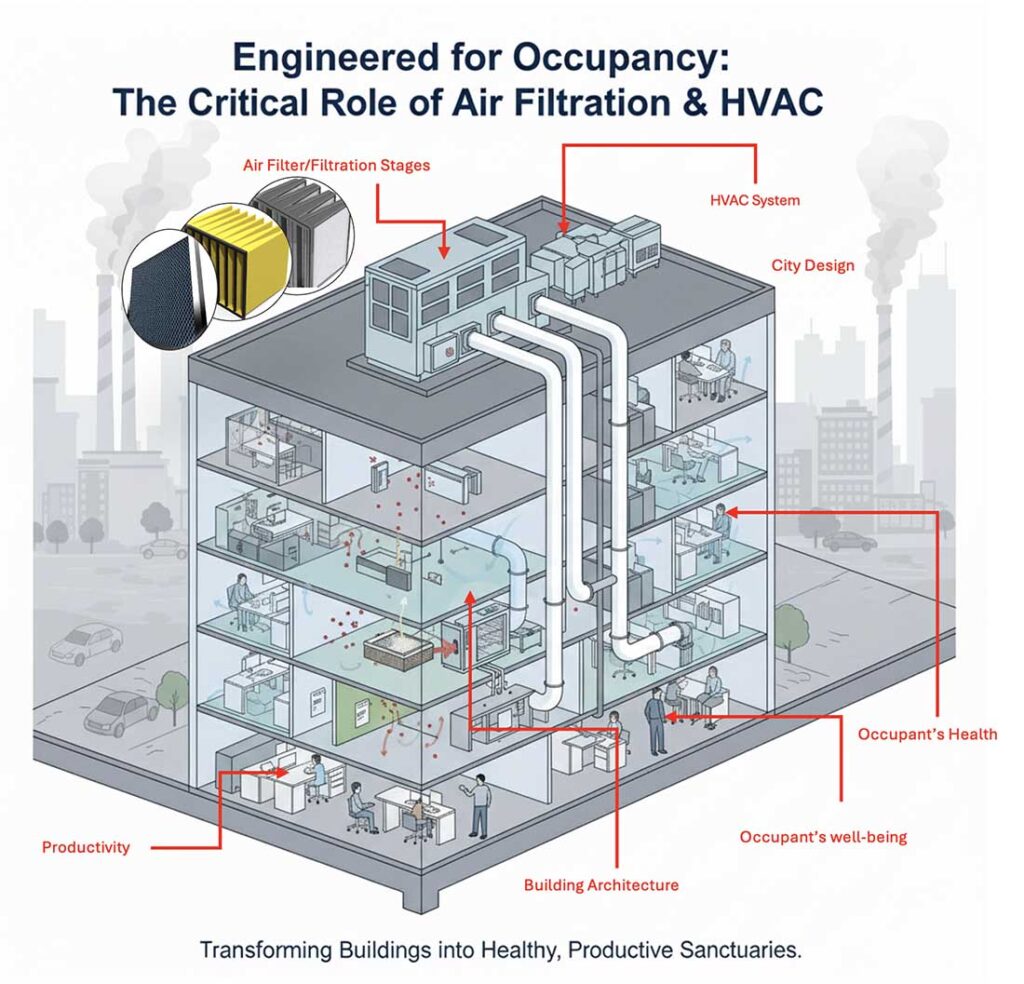
Resistance to such radical change often stems from the perceived economic costs. Business models are entrenched, and the idea of disrupting them for the sake of public health can be met with fierce opposition. However, this perspective fails to account for the immense economic benefits of a healthy population. Reduced healthcare costs, increased productivity, and a more resilient workforce are all direct outcomes of prioritizing public health.
The time for making a business case for improved air quality, health, and well-being is over; the science is settled, and the devastating impact is well established. We must stop wasting time re-debating proven facts and immediately transition to action, governance, and systemic change. Furthermore, why pour critical funding into treating illnesses that are fundamentally preventable in the first place? The energy we spend on treating preventable diseases, cleaning up environmental disasters, and mitigating the effects of climate change far outweighs the investment required to create a healthier, more sustainable world in the first place.
Defying current business models is not a rhetorical gesture to obscure sustainability but an uncompromising call to action as we watch the foundations of our climate being shattered. We must
immediately shift from profit maximization to life preservation, a change that will unleash human ingenuity to develop cleaner technologies, sustainable business practices, and more resilient urban designs. New industries will emerge around environmental remediation, renewable energy, green building materials, and health-centric urban planning. The energy currently locked in unsustainable practices can be liberated to fuel a new era of ethical, life-affirming economic activity.
The Time to Choose
The era of incremental change is over. The moment demands a radical shift from profit-first business models toward a society driven by the principle that every life is worth the energy it takes to save it. This is not merely an ethical choice but the most intelligent and sustainable path, requiring a complete reorientation of our collective endeavors to prioritize public health and human flourishing above financial gain. The air quality missteps of the past are not dismissed as failures; they serve as essential data and powerful lessons that actively tweak future road maps toward sustainability. To achieve this critical goal, we must execute a bold, three-pronged transformation: aggressively campaign to improve air quality through advanced filtration, robust governance, and the swift curbing of fossil fuels; redesign the built environment to function intrinsically as a healthy habitat; and finally, fully embrace the immense economic and innovative opportunities that arise when success is redefined by human and planetary health, not just financial wealth. This is the fight we have to keep on winning.
References:
1 World Health Organization (WHO) (2024) Air pollution. Available at: https://www.who.int/health-topics/air-pollution (Accessed: 24 October 2025).